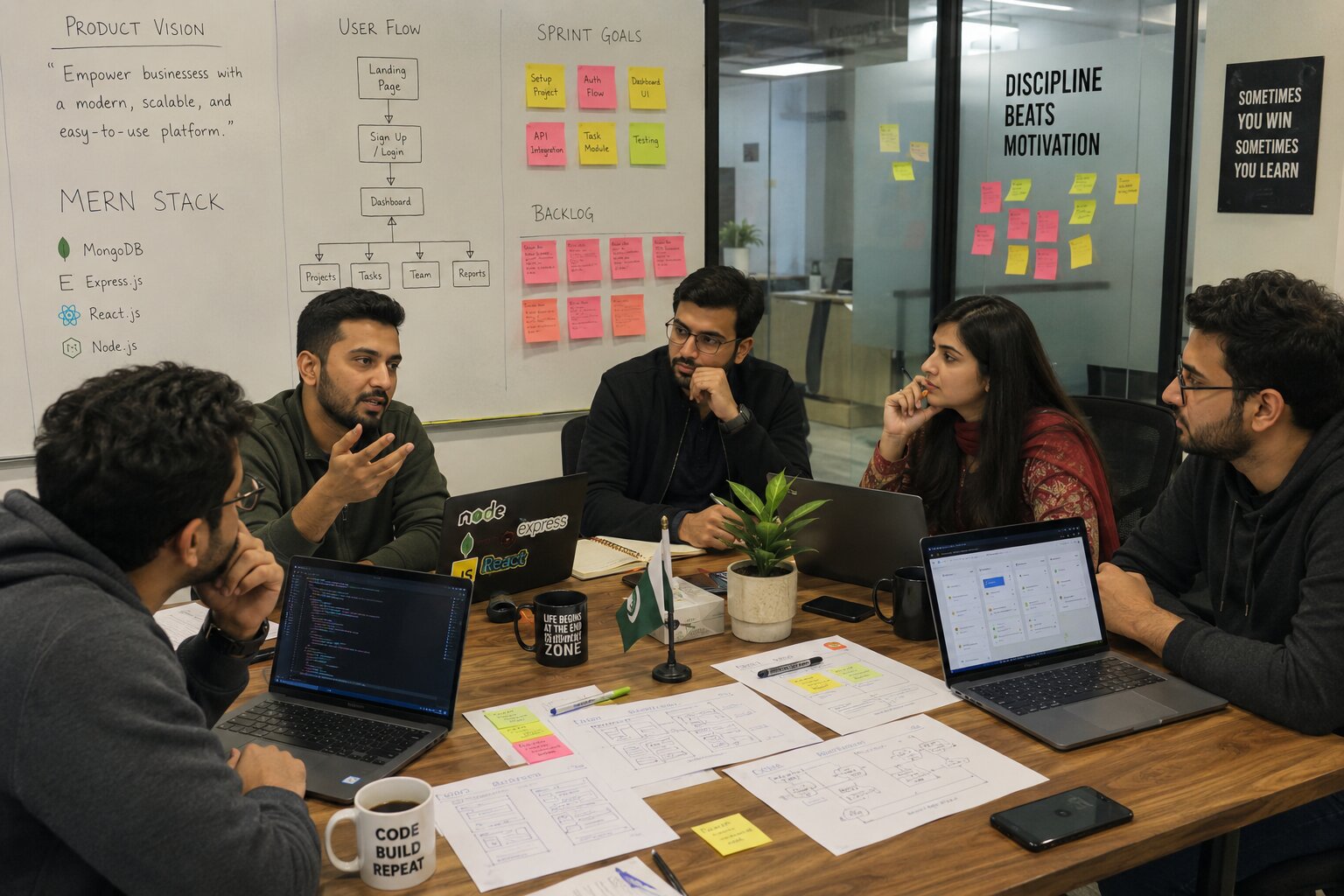
Employer signal
0%
of HR leaders say they avoid hiring recent graduates.
98% report struggling to find talent, yet still pass on fresh graduates.
A twelve-week engineering simulation: real tickets, code review, and a product launch so you graduate with experience employers count.
Pakistan CS/IT pipeline
Most graduates never land roles at industry firms.
Only 1 in 5 makes it through.
Evidence
Employers are saying no. The barrier is experience. The numbers show why the simulation exists.
Employer signal
0%
of HR leaders say they avoid hiring recent graduates.
98% report struggling to find talent, yet still pass on fresh graduates.
Top barrier cited
0%
say lack of real-world experience is the #1 reason.
Teamwork and communication gaps rank close behind.
Hiring odds
Same degree. Same skills. Experience roughly doubles hiring odds.
ZipRecruiter calls work experience the strongest predictor of getting hired.
Without experience
0.0%
hiring rate
With experience
0.0%
hiring rate
Mentors
Program mentors include founders, engineering leaders, and operators who have built and shipped at high-growth teams. Real experience across the stack and the business.

Y Combinator

Markaz Tech

JazzCash

Antematter

AWS

Cursor
Vector
Curriculum
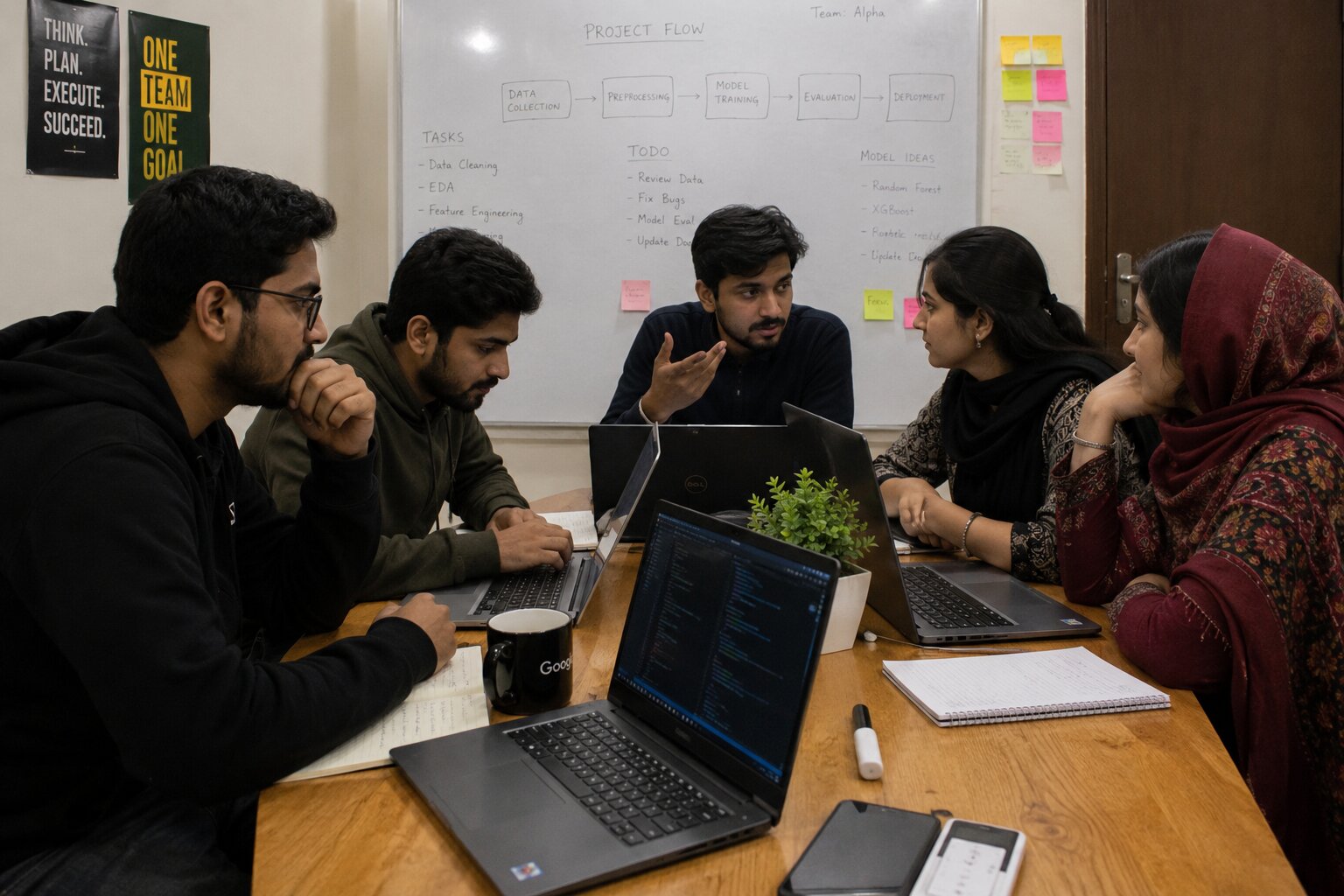
Repeated practice in the habits that make a junior engineer useful on a team.
01
Every feature ships through branches, pull requests, review, and a shared evolving codebase.
02
Participants work in squads of three inside two product teams with shared rituals and review etiquette.
03
Feature requests are deliberately vague, so squads must write specifications and defend scope.
04
Squads build competing solutions, and the strongest pull request becomes the product baseline.
05
Synthetic business-to-consumer traffic exposes bottlenecks and turns performance into a visible engineering problem.
06
Simulated attacks force detection, response, hardening, and post-incident learning.
Tracks
Two teams. One product. Pick where you build.

01 / Frontend-focused product surface
Own the product surface: user-facing features, interface quality, product flows, and client-side architecture.
React and TypeScript
Product UI
Feature PRs
Frontend architecture

02 / Models, APIs, and product intelligence
Work on inference, data pipelines, services, and the backend systems behind an AI-backed product.
Python services
Model integration
API design
Cloud and data flows
Simulation
Every few days, the same loop. You run it until it becomes muscle memory.
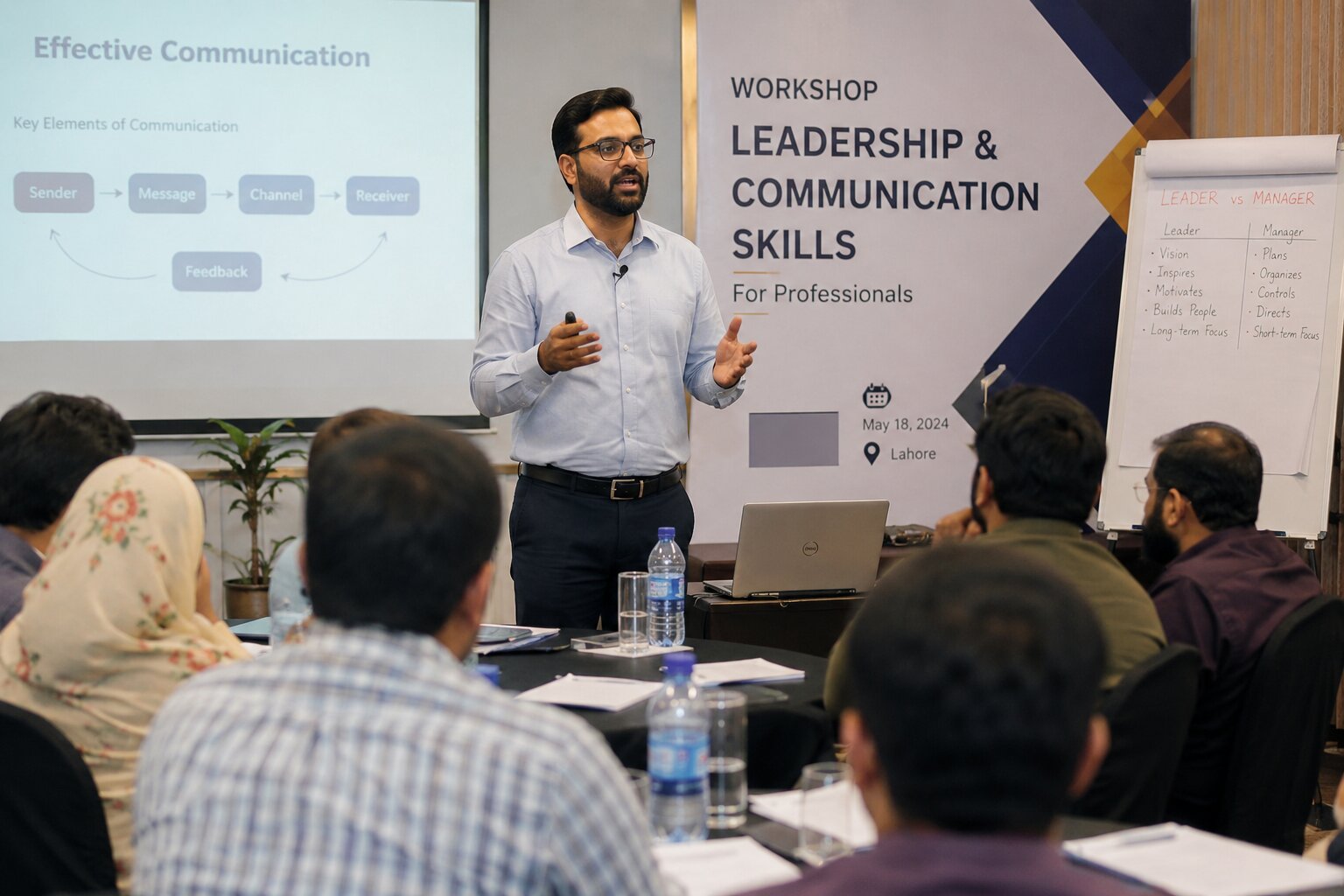
Every cycle starts with deliberate ambiguity, like a real backlog item.
Scope, tradeoffs, and acceptance criteria come before code.
Implementation happens on branches inside a shared codebase.
Work is submitted with tests, context, and merge rationale.
Peers evaluate quality, design, and production readiness.
The strongest contribution becomes the next product baseline.
Program arc
The work ramps from setup to a shipped B2C product.
Week 1
Setup
Tooling, Git workflow, squad formation, codebase orientation, and rules of engagement.
Weeks 2-4
First cycles
Gentle feature cycles, specification writing, reviews, and baseline production habits.
Weeks 5-8
Faster shipping
Tighter cycles, cross-squad integration, early traffic simulations, and first hardening work.
Weeks 9-11
Pressure
Sustained load, attack simulations, performance fixes, and product feature-complete discipline.
Week 12
Public release
A real business-to-consumer product goes live with paid acquisition, monitoring, feedback, and retrospective.
Week 1
Setup
Weeks 2-4
First cycles
Weeks 5-8
Faster shipping
Weeks 9-11
Pressure
Week 12
Public release
Tooling, Git workflow, squad formation, codebase orientation, and rules of engagement.
Gentle feature cycles, specification writing, reviews, and baseline production habits.
Tighter cycles, cross-squad integration, early traffic simulations, and first hardening work.
Sustained load, attack simulations, performance fixes, and product feature-complete discipline.
A real business-to-consumer product goes live with paid acquisition, monitoring, feedback, and retrospective.
Admissions
20 online seats. Two tracks. One product launch. Cohort 1 is live and in progress.